
For players
Play, don't negotiate
The average padel evening starts three days early and runs to a hundred messages in a group chat. We removed that part.
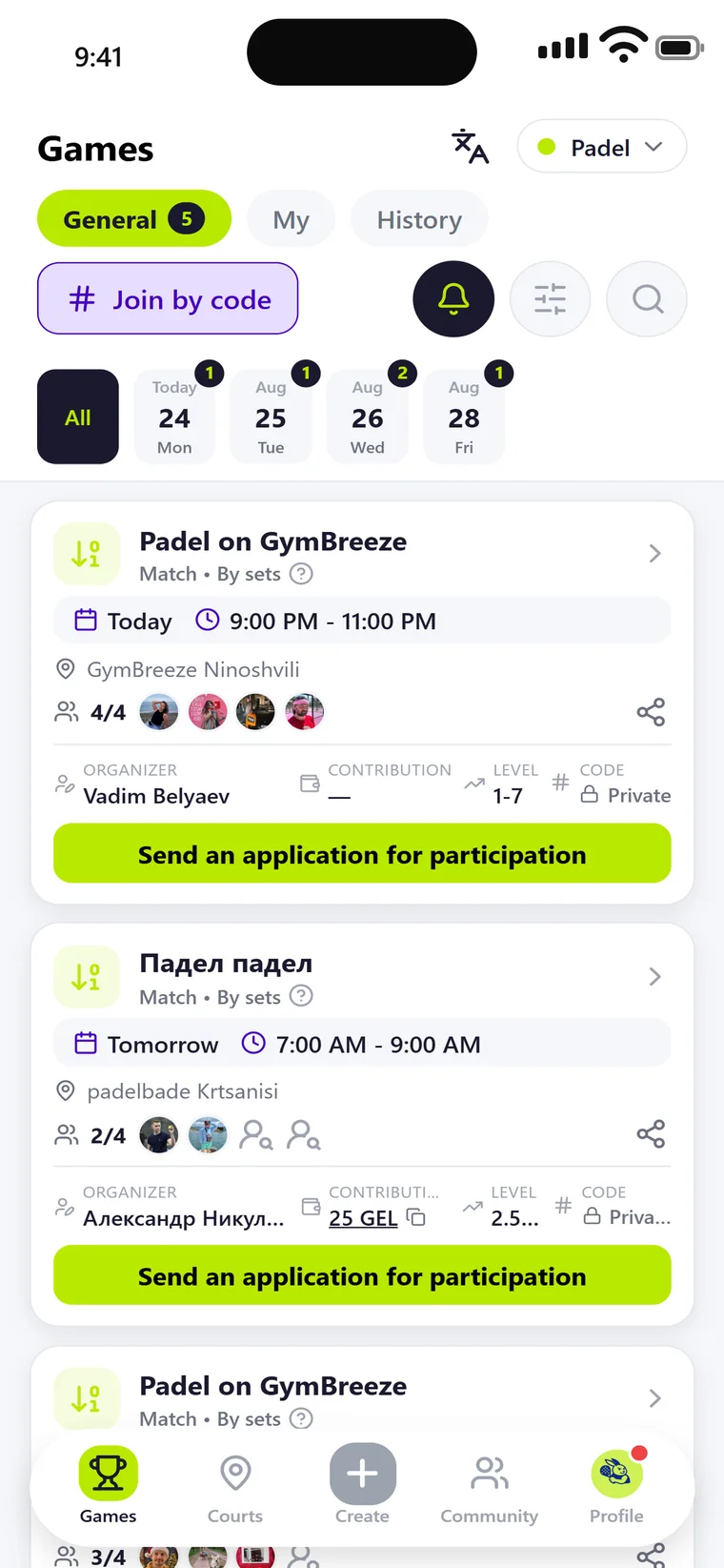
- A feed of open games already filtered to your level
- Partner matching on level, interests and court side
- A rating from every match — and how well confirmed it is
- A breakdown of your game you will not find anywhere else
- 6racket sports
- $0to play, create games and run tournaments
- 100+interests used in matching
- 30 secto sign up via Telegram
Matching
Not "recommended" — here is why
A list of people in your city, sorted by how good a game the two of you would have. Everyone gets their own: a high rating on the other side is not an advantage here, closeness to yours is.
Level first
You cannot play with someone from another league however many interests you share. So level weighs more than everything else put together.
Left looks for right
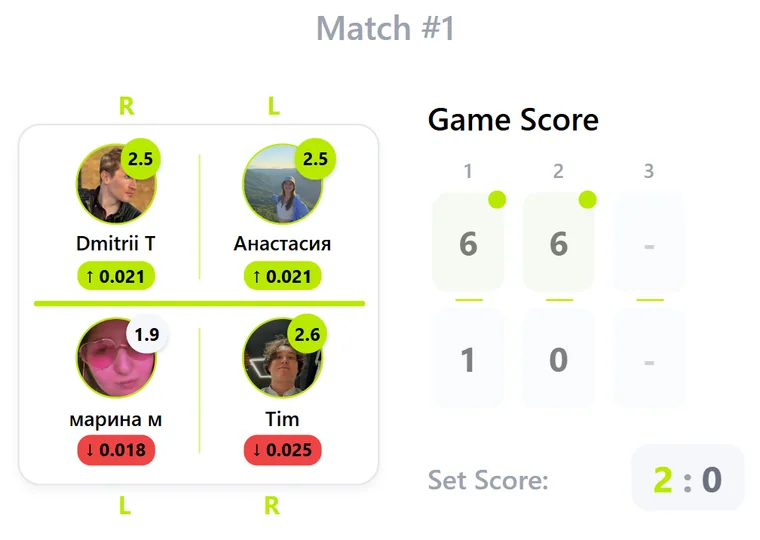
Two people used to the same half of the court rarely make a pair. The app takes that into account — and tells you which side each person plays.
Interests off the court
A hundred-odd tags from football to board games. Padel is the game you go for coffee after, and shared subjects work about as well as a shared level.
The line under the name
"87% level match, plays the left side, shared interests: football, business, board games." Without that line any match list reads as a random order.
And a nudge once a week
Only when the match is genuinely strong and you have never played together. Nothing good found, nothing sent.
Likes and messages
Like someone's profile. If it is mutual you both hear about it, and you take it to direct messages from there.
Statistics
A breakdown, not one win rate
All of it visible only to you: this is an analysis of your own play, not a public shop window.
Court side
Win rate on the left and on the right. Half of all players have stood on the same side for years without once checking it is the right one.
When you play better
Weekday against time of day. For some people it really is Tuesday evening.
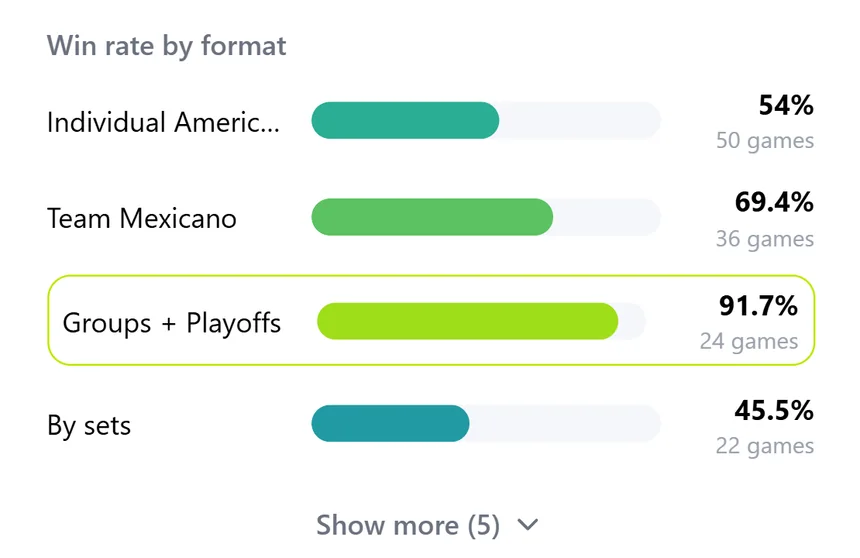
Formats
Different people win Americanos and group-plus-playoff draws. This shows which one you are.
Consistency and deciding sets
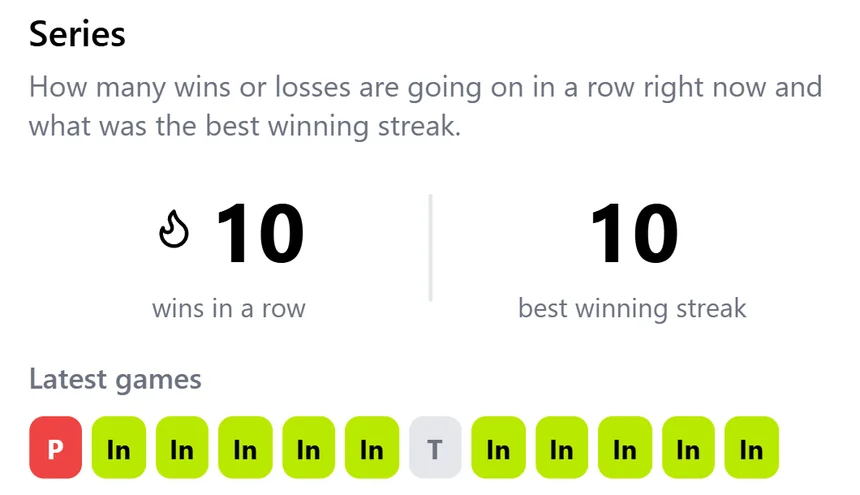
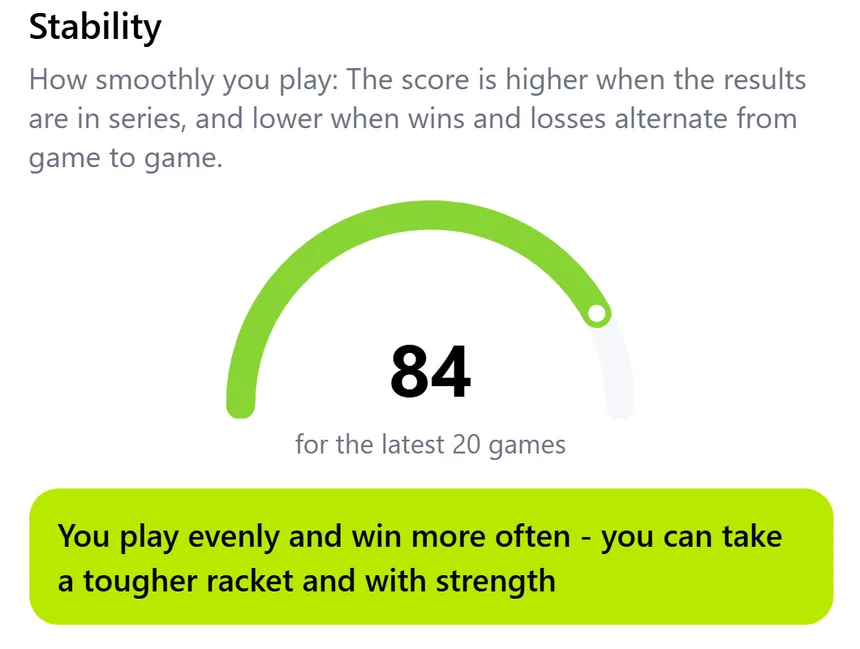
How evenly you play, and what happens at one set all. It is immediately obvious whether you fall apart in the closing stages or come alive.
Partners and opponents
Who you win with and who you do not. Sometimes it is not the person you invite most often.
Who you play against
Your opponents by level. If you have spent years beating weaker players your rating will not move, and here you can see why.
Peer marks
Where you are strong, according to the people who played with you
After a game you can anonymously mark what your partners and opponents are good at. Not a score from one to five — actual attributes: consistency, tactics, serve, the lob, playing off the glass. Those marks build a chart in your profile.
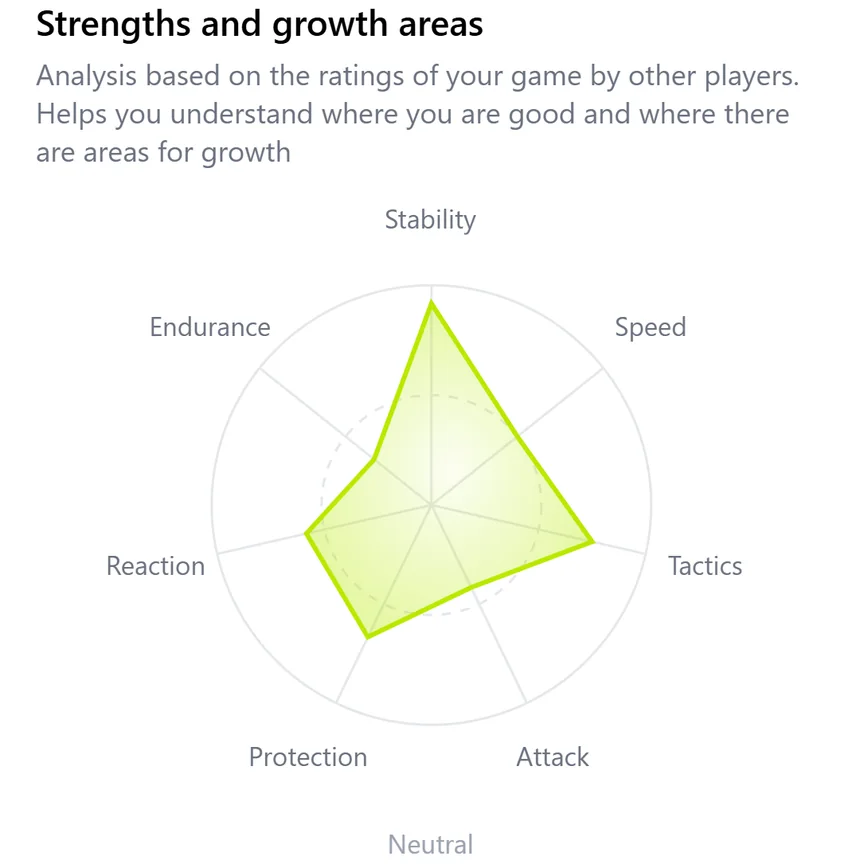
Anonymous
Otherwise marks like these either never get given, or get given out of politeness.
Every sport has its own attributes
Padel has the lob and playing off the glass, tennis has the return and topspin, squash has length control. You mark what that game actually contains.
Contested parts show up immediately
If some people called an attribute a strength and others called it a growth area, it lands right in the middle. That is the part of your game worth thinking about.
Profile
A card worth showing
The profile avatar is not a round photo but a card in the style of sports trading cards: gradient, pattern, a big rating, your place in the city. You pick the colour and the pattern, and some of them unlock through play.
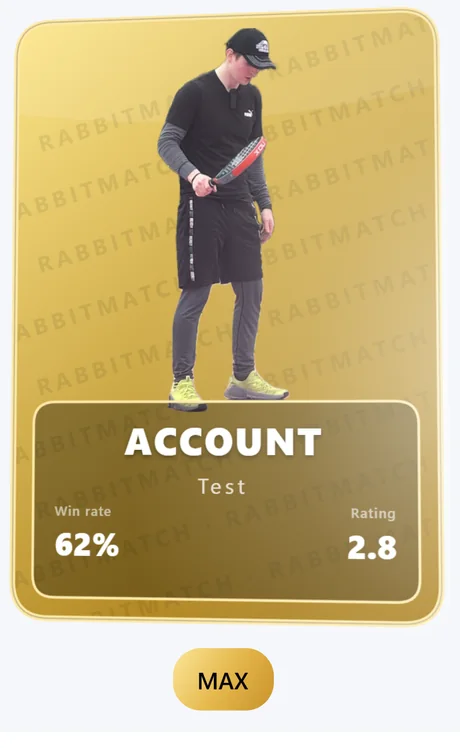
Your place in the city
Computed from games, win rate and rating together. Rating alone will not get you into the top.
Medals and achievements
Some are awarded automatically from results, some by hand for something particular. Some are permanent, some seasonal.
Character and profile fields
Gender, age, city, experience, playing hand, court side. These are also what partner matching is built from, so they are worth filling in.
Getting started
Your first game, step by step
Sign up
Telegram, Apple, Google or email. Through Telegram it takes about thirty seconds and you never invent a password.
Set sport, city and level
Guess the level. The rating corrects it over your first matches — early on it moves faster, so a newcomer reaches their real place sooner.
Fill in the profile
Court side, playing hand, age, interests. Dull, but this is exactly what partner matching is built from.
Take a spot, or create a game
The feed shows who is short of players. Creating your own takes a minute and puts it in front of everyone at the right level.
Play and enter the score
Rating, history and statistics take care of themselves.
Player questions
Is it really free?
Playing, finding games, creating them, keeping a rating and entering tournaments — yes. There are PRO and MAX subscriptions that open the deeper analytics and some extras. The court you pay for at the venue.
I do not have three friends who play.
That is the normal case and the app was built for it. Most games in the feed are posted by people short of one or two players. You join theirs, or post yours and let it fill.
Where does my level come from?
It starts from your own guess at sign-up. After that the rating is recalculated after every game, adjusted for the level of everyone on court: beat stronger players and you gain more, lose to weaker ones and you drop further. The first matches move it faster so a newcomer reaches their real level sooner.
How much can I trust the rating?
Next to the number you can see how many games stand behind it and whether it has been confirmed by play. A rating someone set for themselves and has not yet backed up is flagged as such and does not enter the city top list. That way the top of the table is people who actually played, not people who typed a seven at sign-up.
Who marks my attributes?
Only people you actually played with. Anonymously: you will not see who marked you, and your partner will not know you marked them.
What does it run on?
iPhone, Android, any browser, and Telegram as a Mini App. One account, one set of data.
Get started
There is probably a game tonight
Install it, set your level, look at the feed.
- Download onApp Store
- Get it onGoogle Play
- Open inthe browser
- Open inTelegram
There is probably a game tonight
Install it, set your level, look at the feed.